
How can I stop JEE Main silly mistakes in five steps?
Reduce JEE Main silly mistakes by checking the step that keeps failing, not redoing every calculation. Use this sequence: retry, locate the first error, extract the target, apply one local check, and verify the submitted answer.
- Diagnose honestly before viewing the solution. Retry the missed question without time pressure or hints. If you still cannot choose or explain the method, record a concept or method gap. If you can solve it independently, compare both attempts to identify what changed. A wrong answer is not automatically a silly mistake.
- Find the first wrong line. Classify it as reading, setup, calculation or submission. Reading means missing the requested quantity or qualifier; setup means choosing the wrong equation, unit or constraint. Calculation means mishandling otherwise correct working; submission means selecting or entering something different from your final result. Write “used centimetres in an SI formula”, not “careless”: later wrong lines may be consequences of the first one.
- Extract the target before solving. Write a compact note beside the question number: required quantity, requested unit and qualifier. Examples include “field magnitude, N/C”, “choose incorrect statement” and “number of real solutions”. Mark words such as NOT, incorrect and magnitude.
- Attach one check to the likely failure point. Convert units before substitution, preserve brackets around signed terms, or test candidate roots in the original equation. Estimate the expected sign and order of magnitude when these provide a useful check. Choose the check that addresses your recorded error, rather than adding the same ritual to every question.
- Verify the submitted answer. Match the final rough-work result to the selected option or entered number, including the requested unit. Keep rough work labelled by question number so that you do not copy a neighbouring result. For a count, enter the number of valid answers, not one of their values.
Use this compact error-log template. Record the fresh-question result only after testing the rule:
Question/topic | first wrong step | error category | prevention rule | result on a fresh question
“Check everything twice” is a poor plan for a 180-minute paper. It spends time redoing sound work as well as suspect work. Use local checks while solving, then review answers with identifiable risks.
Correcting a wrong answer changes its contribution from a penalty to full marks:
That is arithmetic, not a promised score improvement. A compulsory-question format does not require blind guessing, and fear of leaving blanks is not evidence for an answer. An unattempted question scores zero.
How do I catch a Physics unit error before calculating?
Convert the distance to metres before squaring it, then compare the result with a reference distance. This checks the setup, which accurate arithmetic alone cannot validate.
Illustrative practice question, not a JEE previous-year question: Find the electric-field magnitude at a point 30 centimetres from a positive charge, using:
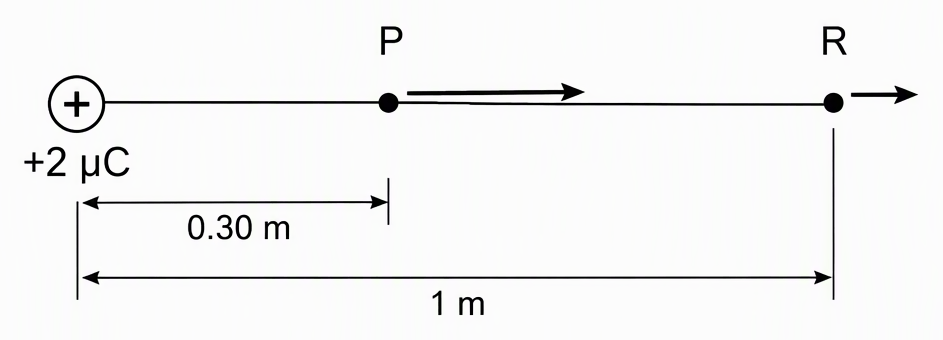
- Diagnose and locate: retry without time pressure. In this tempting substitution, the first error is inconsistent units in the setup, not multiplication.
- Extract the target: electric-field magnitude in newtons per coulomb, not electric potential.
- Apply the unit check before substitution:
At one metre, the field is:
The nearer point must have a stronger field because the field decreases with distance squared. The wrong result fails this comparison.
Physics/point-charge field | used centimetres with an SI constant | setup | convert lengths before squaring | pending: test a fresh variant at one metre against the reference value above
- Verify submission: match the selected option or entered number to the calculated value in the requested unit, not an intermediate result.
How do I avoid counting an extraneous root in Mathematics?
Write the sign constraint before squaring, and substitute every candidate into the original equation afterwards. Squaring can produce candidates that satisfy the new equation but fail the original one. Rechecking arithmetic alone does not test this.
Illustrative practice question: Find the number of real solutions of:
The target note is “number of real solutions”, not “find a root”. Because the square root is non-negative, every solution must satisfy:
Now square and factor:
The common wrong submission is two, because the quadratic has two roots. These are candidates, not yet verified solutions.
Substitute both into the original equation:
Only the positive candidate works. The requested count is:
The prevention rule is “retain constraints during setup; check candidates in the original equation after squaring.” Squaring is not reversible without restrictions because it loses sign information.
If you understand this but skipped verification, repair the procedure. If you do not understand why the extra root appeared, study equivalent transformations first. An error-log reminder cannot replace that instruction.
How do I avoid using solution mass instead of solvent mass in Chemistry?
Write “kilograms of solvent” beside the molality denominator before substituting. A magnitude estimate is insufficient here because using solution mass produces a nearby answer. Check the definition before checking the division.
Illustrative practice question: Six grams of urea are dissolved in 100 grams of water. Assume ideal dilute-solution behaviour and use:
The target is boiling-point elevation, not the final boiling point. Calculate moles of solute and convert only the solvent mass to kilograms:
Molality is moles of solute per kilogram of solvent:
The tempting wrong denominator includes the urea mass:
Both answers have the same order of magnitude. Repeating the division does not expose the error: the first wrong step is denominator selection during setup.
Record the prevention rule exactly: “write kg of solvent beside the denominator before substituting.” Verify that your submitted answer gives the elevation, without adding a boiling point.
Practise a boiling-point-elevation ratio problem to apply the definition in a different setup. For fresh topic practice, JEEnius daily practice problems provide a ten-question set every day, with free sets daily.
What should I practise next to check whether the habit works?
Start with the most frequently repeated error category in your own recent work. Do not assume calculation is the main problem: repeated misreading needs target extraction, while wrong denominators need definition checks.
Use this suggested routine. Ten questions are a manageable practice unit, not a scientifically established threshold.
- Choose one prevention rule and a fresh ten-question topic set. Apply the rule at its intended stage on every relevant question. Immediately re-solving an old question checks correction; solving unseen questions checks whether the habit transfers.
- Move to a timed mixed set, then a 180-minute mock. Keep the same check under changing topics and time pressure. Do not impose an identical time limit on every question: their demands differ.
- Track outcomes separately. Record attempted questions, correct answers, avoidable wrong answers by category, and concept or method gaps. Compare similar topics, difficulty and timing conditions. A higher score on an easier set does not establish that the check worked.
- Keep the before-mock checklist small. Build it from actual repeated errors, such as “extract NOT”, “convert before squaring” and “verify roots”. Leave out generic warnings that specify no action.
During review, prioritise unresolved sign, unit, constraint or entry concerns. Change an answer when you find a specific error, not merely because your confidence has dipped.
For the next unseen set, JEEnius practice mode offers topic sets that skip questions already seen, with free sets included. Apply your chosen rule and record whether the same error recurs: fewer recurrences of that documented error is the standard for improvement, not a score or percentile guarantee.
Next step: practice mode on JEEnius and practise a topic in sets that skip questions you have already seen (free sets included).
Frequently asked questions
How can I reduce silly mistakes in JEE Main?
Retry the missed question without hints, locate the first wrong step, and note the required quantity, unit and qualifier. Apply one check at the likely failure point, then match your submitted answer to your final result. Record a specific prevention rule and test it on fresh questions instead of checking everything twice.
How do I tell a silly mistake from a concept gap?
Retry the question without time pressure or access to the solution. If you still cannot choose or explain the method, record a concept or method gap. If you solve it independently, compare the attempts to find the first error; a wrong answer alone does not establish carelessness.
How do I avoid extraneous roots after squaring?
Write the sign constraints before squaring and check every candidate in the original equation afterwards. For sqrt(x + 2) = x, squaring gives candidates 2 and -1, but only 2 satisfies the original equation. If the question asks for the number of real solutions, submit 1, not the root value.
Does molality use solvent mass or solution mass?
Molality uses moles of solute per kilogram of solvent, not solution. Write 'kg of solvent' beside the denominator before substituting. Using solution mass can give a nearby answer, so an order-of-magnitude check may not catch the error.
How should I practise to stop repeating the same mistakes?
Choose one prevention rule for your most frequent error and apply it to a fresh ten-question topic set. Then carry the same check into a timed mixed set and a 180-minute mock. Track avoidable errors separately from concept gaps and compare similar practice conditions; fewer recurrences of the documented error matter more than a higher score on an easier set.